How Long Does SEO Actually Take to Work? Setting Realistic Expectations
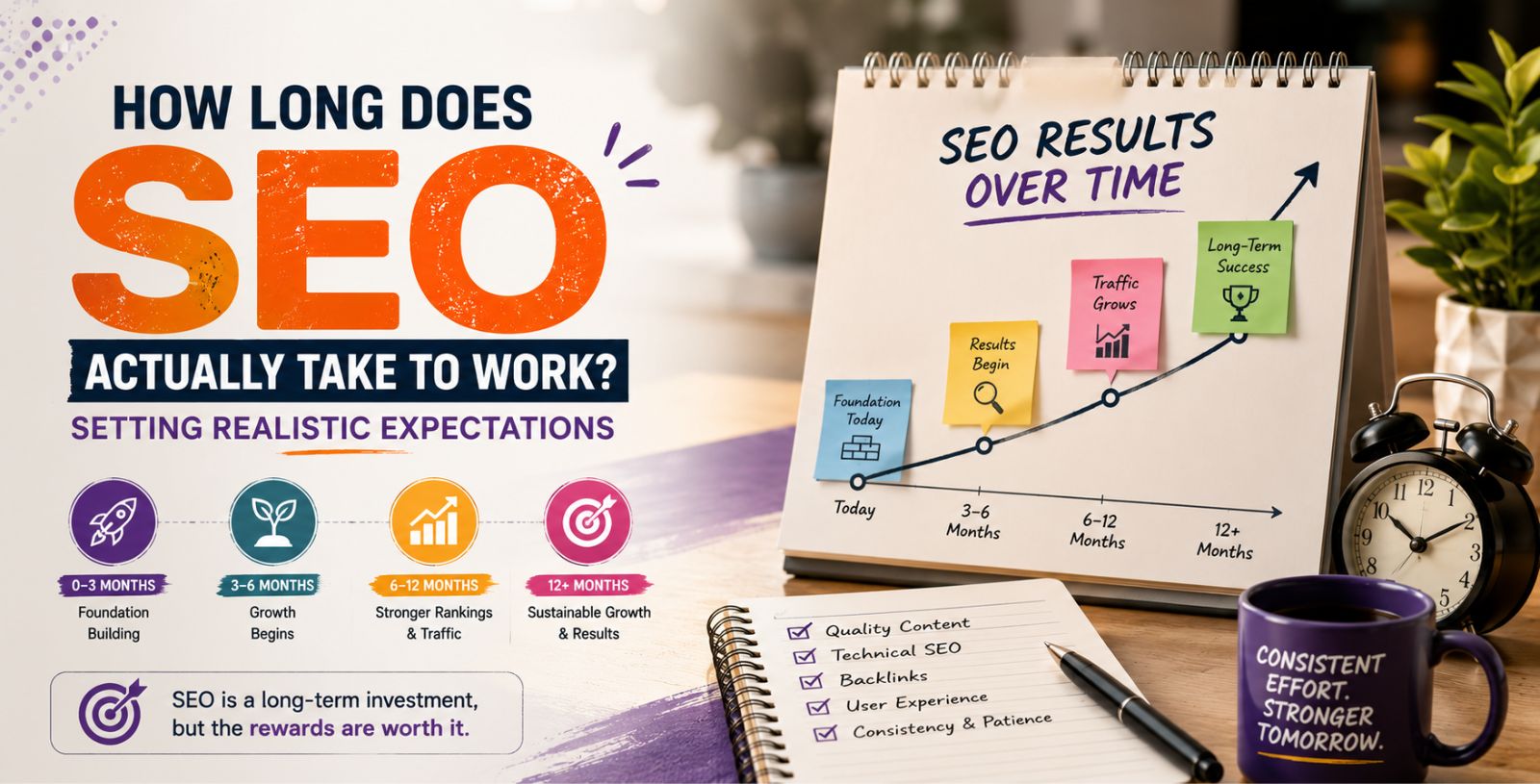
One of the most common SEO questions is simple. How long will it take to see results?
The honest answer is that SEO takes time. It is not an overnight solution. Search engines need time to crawl, understand, and trust your website.
The good news is that SEO delivers lasting value. With the right strategy, your website can continue attracting visitors for years.
Why Doesn't SEO Work Instantly?
SEO involves many moving parts. Search engines look at hundreds of factors before ranking a page.
They evaluate your content, website structure, user experience, and authority. They also compare your site with competitors. This process takes time. That is why quick SEO promises are usually unrealistic.
When Can You Expect Results?
Every website is different. However, most businesses follow a similar timeline.
First Month
The focus is on building a strong foundation. This usually includes:
Website audits.
Keyword research.
Technical improvements.
Content planning.
Fixing errors.
You may not notice major ranking changes yet. However, this work is essential.
Months Two to Three
Search engines begin noticing improvements.
Some pages may start ranking for less competitive keywords. Organic traffic may also increase slightly.
These early signs show that your SEO strategy is moving in the right direction.
Months Four to Six
Many businesses see meaningful progress during this stage.
Your website may rank for more keywords. Organic traffic often grows steadily. You may also receive more enquiries or sales.
The exact results depend on your industry and competition.
After Six Months
SEO continues to build momentum.
New content performs better because your website has gained more authority. Existing pages can also improve their rankings over time.
Consistent effort produces stronger long-term results.
What Affects SEO Results?
Several factors influence how quickly SEO works.
Website Age
Older websites often have an advantage. They may already have authority and backlinks.
New websites usually take longer to build trust.
Competition
Some industries are highly competitive.
Ranking for popular keywords takes more time. Less competitive keywords often show results sooner.
Content Quality
Helpful content performs better than content written only for search engines.
Answer real customer questions. Keep your information fresh and accurate.
Technical SEO
A fast website creates a better experience.
Search engines also prefer websites that are secure, mobile-friendly, and easy to crawl.
Backlinks
Links from trusted websites improve your credibility.
Quality matters more than quantity. A few strong backlinks are better than many poor-quality ones.
Common SEO Mistakes
Many businesses expect results too quickly. Some also stop investing after only a few months. This can slow their progress.
Other common mistakes include:
Publishing thin content.
Ignoring technical issues.
Using too many keywords.
Copying competitor content.
Skipping regular updates.
Avoiding these mistakes helps your SEO strategy succeed.
How Can You Speed Up SEO?
You cannot force search engines to rank your website. However, you can improve your chances by following best practices.
Focus on:
Publishing useful content regularly.
Improving website speed.
Updating older pages.
Targeting relevant keywords.
Earning quality backlinks.
Monitoring website performance.
Small improvements add up over time.
Why Patience Matters
SEO is a long-term investment. Paid ads stop when your budget ends. SEO keeps working long after your content is published.
That is why many successful businesses continue investing in SEO every month. Steady growth is usually more valuable than quick wins.
Final Thoughts
SEO rewards consistency, not shortcuts.
Most businesses begin seeing meaningful improvements within three to six months. Stronger results often appear after six months of ongoing work. The key is to stay patient and keep improving your website. Every update helps build a stronger online presence.
At NaughtyBytes Studio, SEO is built around realistic goals and sustainable growth. Instead of chasing quick rankings, the focus stays on creating long-term results that support your business.
FAQs
1. How long does SEO usually take?
Most businesses start seeing noticeable results within three to six months. Larger improvements often take longer.
2. Why is SEO slower than paid advertising?
SEO builds organic visibility over time. Paid ads generate traffic immediately but stop when the budget ends.
3. Can a new website rank quickly?
Yes, but it depends on competition, content quality, and the overall SEO strategy.
4. Does updating content improve SEO?
Yes. Fresh and relevant content can improve rankings and attract more visitors.
5. Is SEO a one-time task?
No. SEO requires regular updates, monitoring, and optimisation to maintain strong results
In short: SEO is a long-term investment, not a quick fix. Find out how long it takes to see results and what you can do to improve your website's performance over time.