SEO Myths That Are Wasting Yorkshire Business Owners' Money
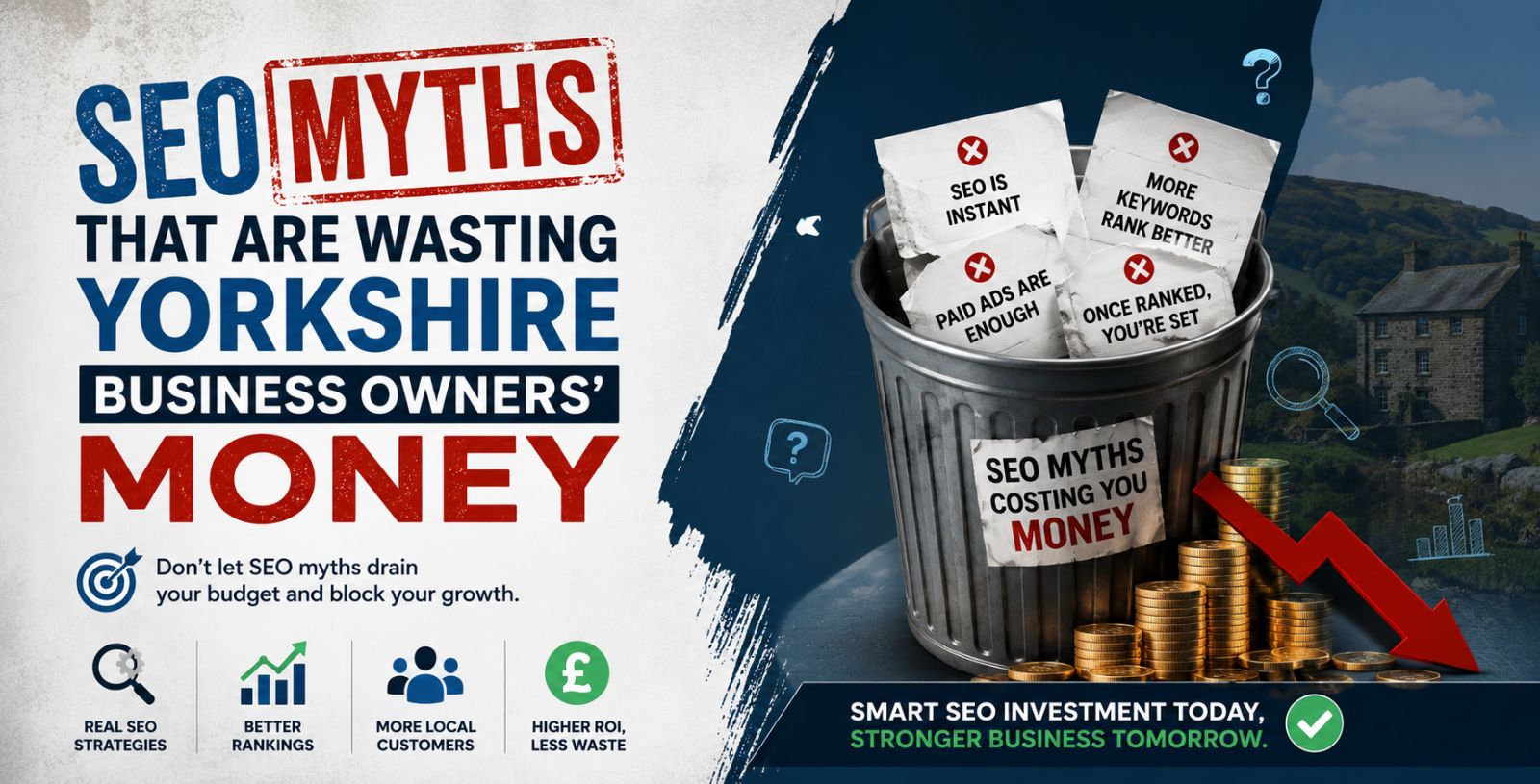
SEO has changed a lot over the years. However, many old myths still exist. These myths often lead business owners to make poor marketing decisions.
Some businesses spend money on strategies that no longer work. Others avoid SEO because they believe it is too expensive or too complicated.
The truth is different. Good SEO is based on proven methods, quality content, and a great user experience. Understanding the facts can save both time and money.
Myth 1: SEO Delivers Instant Results
Many people expect SEO to work within a few days.
That rarely happens. Search engines need time to crawl, index, and evaluate your website. They also compare your pages with competitors.
Most businesses start seeing meaningful improvements after several months. Patience is an important part of every successful SEO strategy.
Myth 2: Ranking First Is the Only Goal
The number one ranking looks impressive. However, it is not the only measure of success. The real goal is attracting the right visitors. Those visitors should become enquiries, customers, or sales.
A website with fewer but relevant visitors often performs better than one with large amounts of untargeted traffic.
Myth 3: More Keywords Mean Better Rankings
This myth still causes many problems. Repeating the same keyword again and again makes content difficult to read. Search engines are also smart enough to recognise keyword stuffing.
Instead, write naturally. Focus on answering customer questions and using keywords where they make sense.
Myth 4: SEO Is a One-Time Task
Some business owners believe SEO ends after launching a website. That is not true.
Search engines update their algorithms regularly. Competitors also improve their websites over time. Regular content updates, technical improvements, and performance reviews help maintain strong rankings.
Myth 5: Paid Ads Improve Organic Rankings
Running paid ads can increase website traffic. However, ads do not improve your organic search rankings.
SEO and paid advertising are different marketing strategies. Both can work together, but one does not directly affect the other.
Myth 6: Any Backlink Is a Good Backlink
Backlinks remain an important ranking factor. However, quality matters far more than quantity.
Links from trusted and relevant websites help build authority. Poor-quality or spammy links can damage your website instead. A smaller number of strong backlinks is always the better choice.
Myth 7: Local SEO Is Only for Large Companies
Many Yorkshire businesses believe local SEO only benefits national brands. The opposite is true.
Local SEO helps nearby customers discover your business. It improves your visibility for location-based searches and supports local growth. For service businesses and local shops, this can make a significant difference.
Myth 8: More Content Always Means Better SEO
Publishing more pages does not guarantee better results. Thin or repetitive content adds very little value.
High-quality content performs much better. Every page should answer a real question or solve a customer problem. Useful content builds trust with both visitors and search engines.
How Can Yorkshire Businesses Avoid These Mistakes?
A successful SEO strategy focuses on long-term growth. Instead of chasing shortcuts, businesses should:
Create helpful and original content.
Improve website speed.
Fix technical issues.
Target relevant keywords.
Build quality backlinks.
Update content regularly.
These steps produce stronger and more sustainable results.
Why Choosing the Right SEO Partner Matters
SEO requires knowledge, planning, and consistency. Working with experienced professionals helps you avoid outdated tactics. It also ensures your investment supports long-term business growth.
At NaughtyBytes Studio, every SEO strategy is built around real business goals. The focus stays on ethical optimisation, measurable improvements, and sustainable results instead of empty promises.
Final Thoughts
SEO myths can cost businesses both time and money. Believing outdated advice often leads to poor decisions and missed opportunities. A well-planned SEO strategy focuses on quality, consistency, and user experience.
By understanding what really works, Yorkshire business owners can invest with confidence and build stronger online visibility for the future.
FAQs
1. Do SEO results happen overnight?
No. SEO usually takes several months to produce meaningful and lasting results.
2. Does repeating keywords improve rankings?
No. Keyword stuffing can hurt readability and may affect your website's performance.
3. Is local SEO important for Yorkshire businesses?
Yes. Local SEO helps nearby customers find your business when searching online.
4. Do paid ads improve SEO rankings?
No. Paid advertising and organic SEO are separate marketing strategies.
5. How often should SEO be updated?
SEO should be reviewed regularly. Fresh content and ongoing optimisation help maintain strong rankings.
In short: Successful SEO is built on proven strategies, not shortcuts. This guide explains the most common SEO myths and how Yorkshire businesses can avoid costly mistakes.