The Ultimate On-Page SEO Checklist
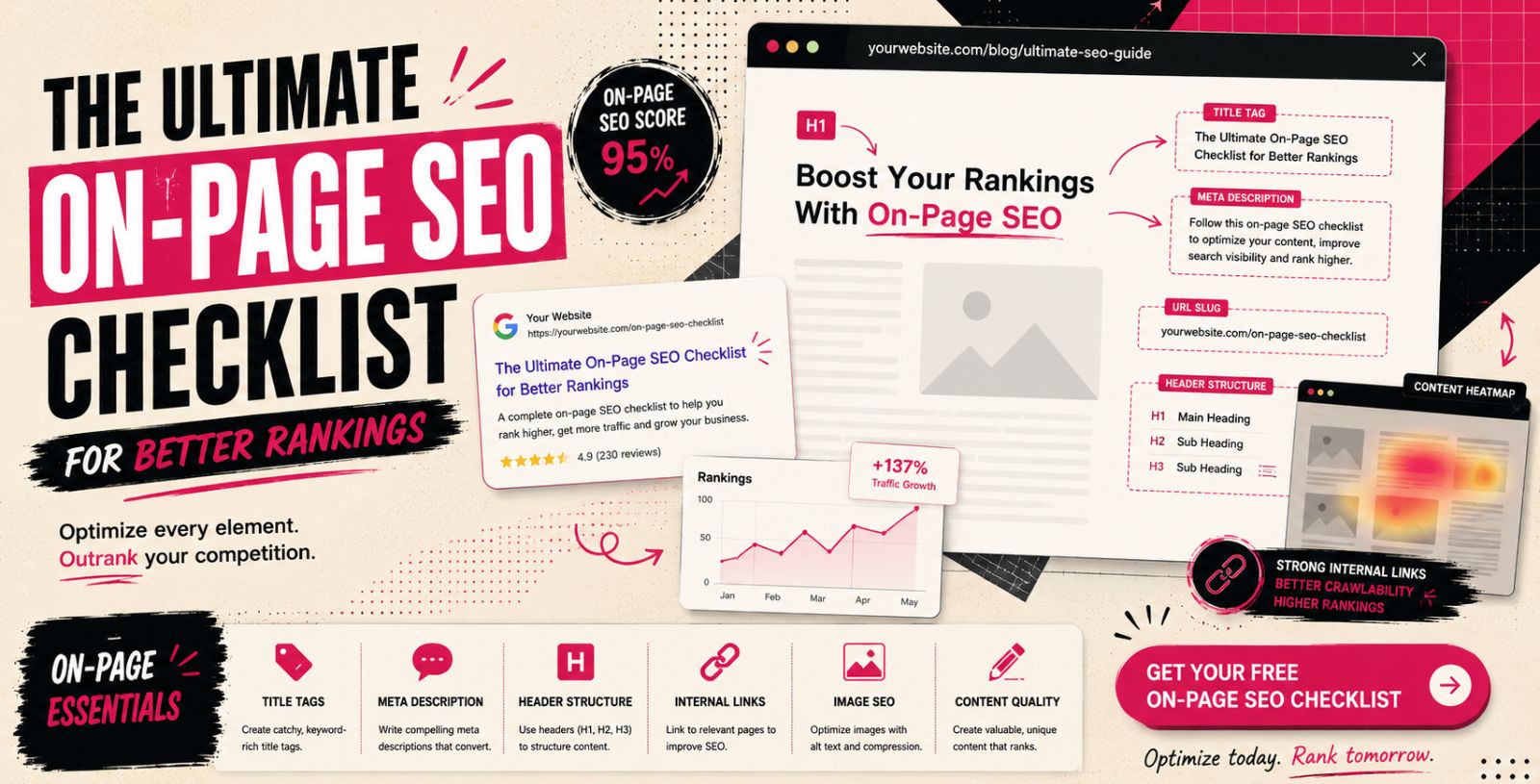
On-page SEO is one of the most important parts of any successful SEO strategy. It focuses on optimising the elements within your website pages to help search engines understand your content and improve your rankings.
Unlike off-page SEO, which focuses on activities outside your website such as backlinks and online mentions, on-page SEO gives you direct control over your website's content, structure, and user experience.
A well-optimised page helps search engines identify what your content is about while making it easier for visitors to find valuable information. Following a complete on-page SEO checklist ensures your website is properly optimised for both users and search engines.
What Is SEO?
SEO (Search Engine Optimisation) is the process of improving a website to increase its visibility in search engine results pages (SERPs). It helps search engines understand your content while making it easier for users to find relevant information when they search online.
A strong SEO strategy focuses on improving different areas of a website, including content quality, technical performance, user experience, and website authority. The main goal is to attract more organic traffic and improve rankings for relevant search queries.
SEO can be divided into three main areas:
On-Page SEO: Optimising website content, headings, keywords, images, and internal links.
Technical SEO: Improving website performance, crawling, indexing, mobile usability, and site structure.
Off-Page SEO: Building website authority through backlinks, brand mentions, and external signals.
By combining these SEO practices, businesses can improve their online visibility, reach the right audience, and achieve long-term growth in search results.
What Is On-Page SEO?
On-page SEO refers to the process of optimising individual web pages to improve their visibility in search engine results. It includes everything from content quality and keyword placement to page structure, internal links, and technical elements.
The main goal of on-page SEO is to create pages that are:
Easy for search engines to understand
Useful for visitors
Relevant to search queries
Optimised for better rankings
Strong on-page optimisation is an essential part of SEO because it helps search engines understand the purpose and value of your website pages.
Why Is On-Page SEO Important?
Search engines analyse many different factors before ranking a page. Proper on-page optimisation helps provide clear signals about your content and improves your chances of appearing in relevant searches.
Some benefits of effective on-page SEO include:
Improved search engine visibility
Better user experience
Higher organic traffic
Increased engagement
Better conversion opportunities
While backlinks and external signals are important, strong on-page SEO creates the foundation needed for long-term SEO success.
The Ultimate On-Page SEO Checklist
1. Perform Keyword Research
Every successful page starts with proper keyword research. Before creating content, identify the terms your target audience is searching for.
Choose keywords that:
Match user search intent
Have relevant search volume
Align with your business goals
Fit naturally into your content
Avoid keyword stuffing. Search engines now focus more on content relevance and usefulness rather than repeated keywords.
2. Optimise Your Title Tag
The title tag is one of the first elements search engines and users see. A well-written title helps improve rankings and encourages users to click your page.
Best practices:
Include your primary keyword naturally
Keep it clear and descriptive
Make it appealing to users
Keep it within recommended length limits
Example:
Poor title:
SEO Guide
Better title:
The Ultimate On-Page SEO Checklist for Better Rankings
3. Write Compelling Meta Descriptions
A meta description summarises what users can expect from your page. While it may not directly affect rankings, it can influence click-through rates.
A good meta description should:
Include the main topic naturally
Explain the value of the page
Encourage users to click
Avoid duplicate descriptions across pages
4. Use Proper Heading Structure
Headings help organise your content and make it easier for users and search engines to understand your page.
Follow a clear hierarchy:
H1: Main page topic
H2: Major sections
H3: Supporting points
Only use one H1 heading per page and ensure it accurately describes your content.
5. Create High-Quality Content
Content remains one of the most important parts of on-page SEO. Your content should answer user questions and provide genuine value.
High-quality content should:
Match search intent
Provide detailed information
Be easy to read
Include relevant examples
Be updated regularly
Avoid creating content only for search engines. Focus on helping users solve their problems.
6. Optimise Your URL Structure
A clean URL helps both users and search engines understand your page topic.
Best practices:
Keep URLs short
Include the main keyword where relevant
Avoid unnecessary numbers and symbols
Use readable words
Example:
Good:
/on-page-seo-checklist
Poor:
/page?id=12345
7. Add Internal Links
Internal linking connects related pages on your website and helps search engines discover important content.
Benefits of internal linking:
Improves website navigation
Distributes page authority
Helps search engines understand relationships between pages
Keeps users engaged longer
For example, while discussing on-page optimisation, you can naturally link to related guides about technical SEO, content optimisation, or on-page vs off-page SEO.
8. Optimise Images
Images improve user experience, but they also need optimisation.
Follow these image SEO practices:
Use descriptive file names
Add relevant alt text
Compress images for faster loading
Use appropriate image formats
Avoid oversized images
Optimised images can improve page speed and help search engines understand visual content.
9. Improve Page Speed
Website speed plays an important role in user experience and SEO performance.
To improve page speed:
Compress images
Reduce unnecessary scripts
Use browser caching
Optimise website code
Improve server performance
A faster website provides a better experience and reduces user frustration.
10. Make Your Pages Mobile-Friendly
Most searches now happen on mobile devices, making mobile optimisation essential.
Ensure your website:
Works properly on all screen sizes
Has easy-to-use navigation
Loads quickly on mobile devices
Uses readable text sizes
A mobile-friendly website improves usability and supports better search performance.
11. Optimise Content Readability
Good SEO content should be easy to understand.
Improve readability by:
Using short paragraphs
Adding bullet points
Using clear headings
Avoiding complex sentences
Breaking up large sections of text
Better readability keeps visitors engaged and improves user experience.
12. Add Schema Markup
Schema markup helps search engines understand additional information about your pages.
Depending on your content type, you can use schema for:
Articles
Products
FAQs
Reviews
Organisations
Local businesses
Proper schema implementation can help your pages appear with enhanced search results.
13. Optimise for User Experience
Google focuses heavily on providing users with helpful results. A good user experience can support better SEO performance.
Focus on:
Easy navigation
Clear page layouts
Helpful content
Fast loading times
Mobile usability
A page that satisfies visitors is more likely to perform well in search results.
On-Page SEO vs Off-Page SEO
On-page SEO focuses on improvements made directly on your website, while off-page SEO focuses on activities outside your website.
On-Page SEO Includes:
Content optimisation
Keywords
Headings
Internal links
Images
Page speed
Off-Page SEO Includes:
Backlinks
Brand mentions
Digital PR
External authority signals
Both strategies work together. Strong on-page optimisation creates the foundation, while off-page SEO helps build authority and trust.
How Often Should You Review Your On-Page SEO?
SEO is not a one-time task. Search trends, competitors, and algorithms continue to change, so regular reviews are important.
You should review your pages when:
Rankings drop
Traffic decreases
Content becomes outdated
Search intent changes
Competitors improve their content
Regular optimisation helps maintain and improve search visibility.
Common On-Page SEO Mistakes to Avoid
Keyword Stuffing
Using keywords excessively can make content difficult to read and may negatively impact user experience.
Duplicate Content
Publishing similar content across multiple pages can create confusion for search engines.
Ignoring Internal Links
Without internal links, important pages may receive less visibility.
Poor Mobile Experience
A website that performs poorly on mobile devices can lose potential visitors.
Neglecting Content Updates
Outdated information can reduce the usefulness and competitiveness of your pages.
Final Thoughts
On-page SEO is the foundation of a successful search engine optimisation strategy. By improving your content, page structure, technical elements, and user experience, you make it easier for search engines and users to understand your website.
Following this ultimate on-page SEO checklist helps ensure your pages are properly optimised, competitive, and prepared to attract more organic traffic.
FAQs
What is included in an on-page SEO checklist?
An on-page SEO checklist includes keyword research, title tag optimisation, meta descriptions, headings, content quality, internal linking, image optimisation, page speed, mobile usability, and schema markup.
Is on-page SEO more important than off-page SEO?
Both are important for SEO success. On-page SEO creates a strong foundation, while off-page SEO helps improve authority through backlinks and external signals.
How long does it take to see results from on-page SEO?
Results depend on factors such as website authority, competition, content quality, and search demand. Some improvements may appear within weeks, while others can take several months.
Can I do on-page SEO myself?
Yes, many on-page SEO tasks can be completed without advanced technical skills. Using a checklist helps ensure important optimisation areas are not missed.
Does on-page SEO improve Google rankings?
Yes, effective on-page SEO helps search engines understand your content and can improve your chances of ranking higher for relevant searches.

1. Optimise Page Elements

2. Create SEO-Friendly Content
3. Improve Internal Linking
4. Optimise Images and Media
5. Enhance User Experience
In short: Learn how to optimise your website with this complete on-page SEO checklist. Discover essential techniques for improving content, headings, keywords, internal links, page speed, user experience, and other key elements that help boost search visibility and rankings.